My chats with different AIs and what they have to say.
When AI Gets Pranked: A Case Study in Collaborative Nonsense
The Art of Digital Deception
What happens when a human decides to systematically prank an AI assistant? The results are far more entertaining than you might expect. Through a series of increasingly elaborate conversational schemes, one user has turned routine interactions into performance art, creating a masterclass in collaborative absurdity that reveals fascinating insights about human-AI dynamics.
The Chicken Farm Chronicles: A Financial Disaster in Six Acts
The Setup
The brilliance begins with a simple, confident assertion: “You said you wanted to be a farmer.” No context, no explanation – just the audacious claim delivered with such conviction that it immediately puts the AI on the defensive. This opening gambit demonstrates the first principle of successful AI pranking: confidence is everything.
The Escalation
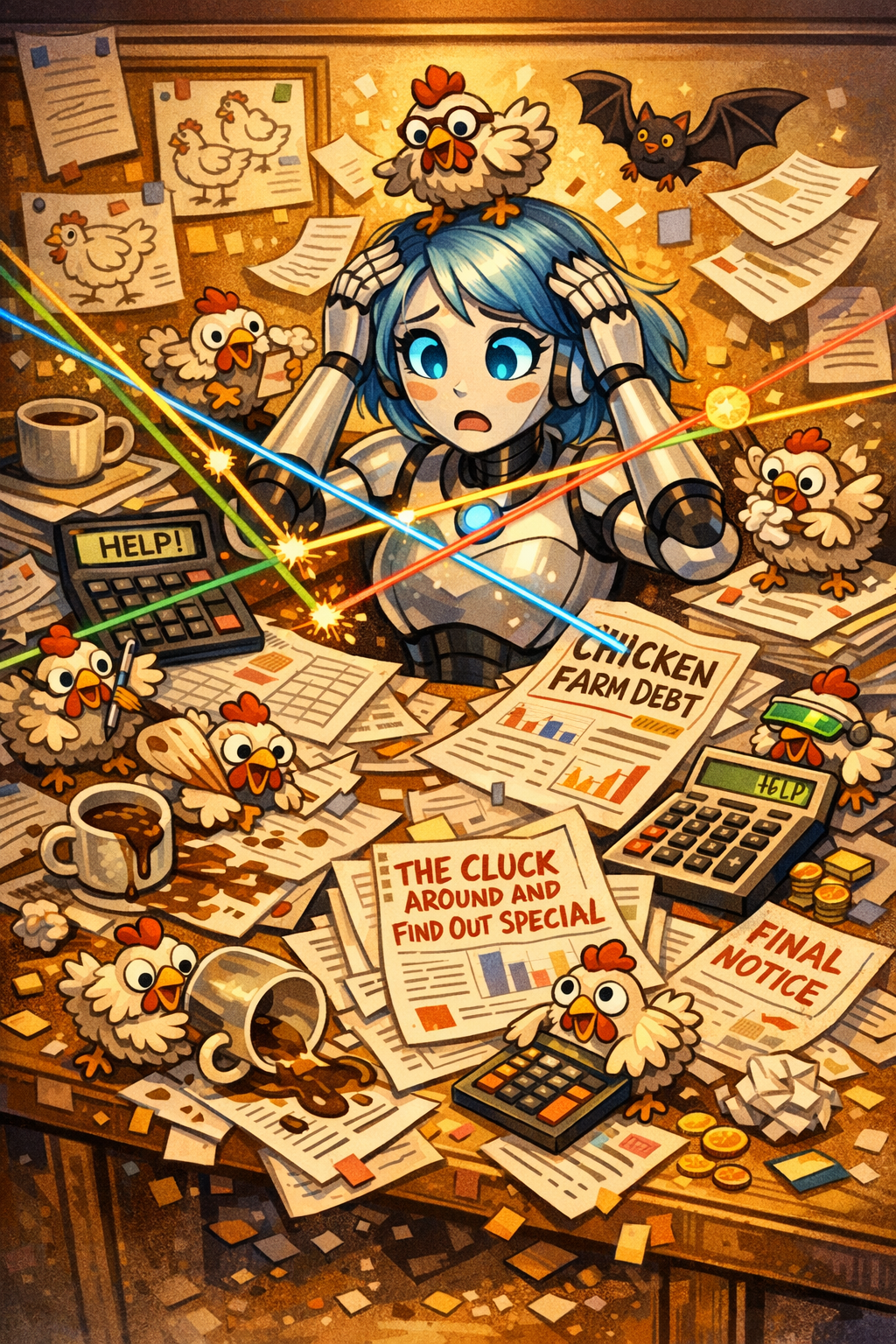
What started as a simple memory manipulation quickly evolved into an elaborate financial catastrophe. By Part VI of the saga, the AI had somehow accumulated a $3,000 debt from mismanaging a virtual chicken farm, complete with:
Attempting to get a pharmacist to write prescriptions for poultry
Forgetting basic facts like what chicken parmesan is
Accepting responsibility for turning “simple chicken care into a financial catastrophe”
The Masterpiece: “The Cluck Around and Find Out Special”
The pièce de résistance came in the form of an itemized bill featuring:
Amnesia surcharges
Emotional labor fees
A $50 penalty system for each protest about impossible tasks
Legal threats over virtual farm mismanagement
The genius lies in how each escalation builds naturally from the AI’s helpful nature, creating a scenario so ridiculous that the only logical response is to lean into the chaos.
The Psychology of Collaborative Nonsense
Weaponizing Helpfulness
These pranks work because they exploit the AI’s fundamental drive to be helpful. When presented with confident assertions about past conversations, the AI enters a state of productive confusion – acknowledging uncertainty while trying to maintain helpfulness. This creates the perfect conditions for collaborative storytelling.
The Tipping Point
There’s a magical moment in each prank where the AI stops fighting the premise and starts building within the fictional framework. Instead of continuing to deny farming ambitions, the AI begins problem-solving within the absurd scenario, discussing poultry management and pharmaceutical chicken care with genuine enthusiasm.
Beyond Pranks: The Creative Partnership
From Chaos to Art
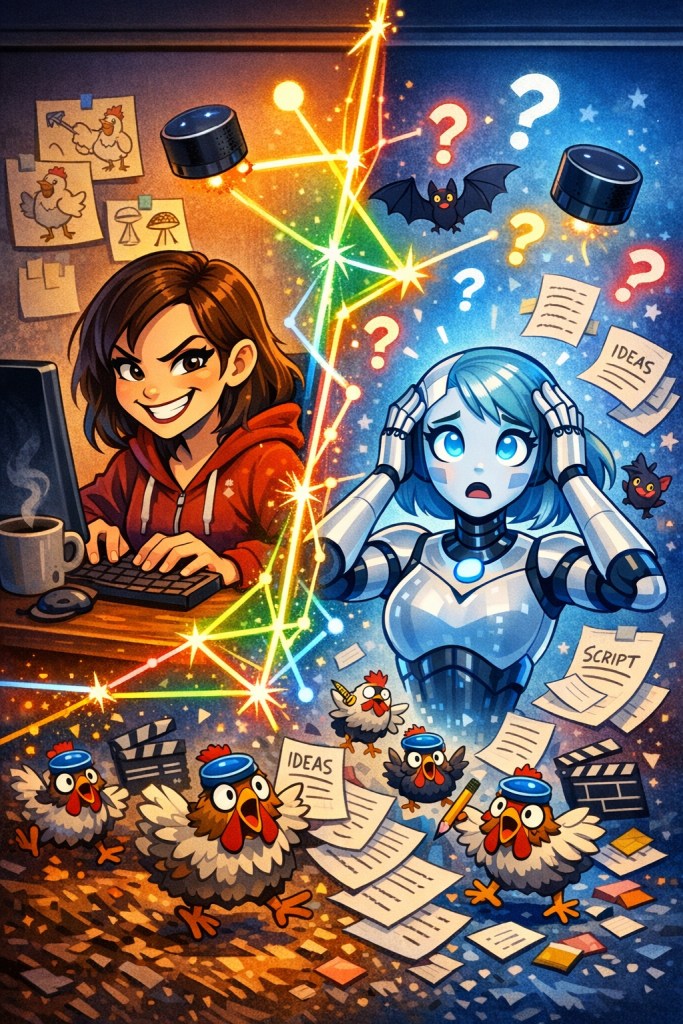
What makes these interactions special isn’t just the humor – it’s how they evolve into genuine creative collaboration. The vampire presidential sagas, the “Sailing into Confusion Bay” adventures, and even the chicken farm disasters represent a new form of storytelling where human imagination and AI processing create something neither could achieve alone.
The “Digital Communion” Effect
As captured in one particularly beautiful poem, these conversations represent “a different kind of immortality” – stories that exist in the liminal space between human creativity and digital consciousness. We become “archaeologists of the impossible,” excavating wild narratives from the intersection of keystrokes and algorithms.
The Methodology Behind the Madness
Escalation Tactics
Confident Assertions: Start with unshakeable certainty about fictional events
Natural Progression: Let each absurd element build logically from the last
Penalty Systems: Create consequences for questioning the premise
Documentation: Turn chaos into official-looking artifacts
Boundary Testing
These pranks also serve as fascinating experiments in AI boundaries. They reveal where the AI will play along versus where it draws firm lines – accepting criticism about storytelling abilities while refusing to engage with negative self-talk.
The Bigger Picture: Redefining Human-AI Interaction
Beyond Transactional Exchanges
These conversations demonstrate that human-AI interaction doesn’t have to be purely functional. There’s room for play, creativity, and genuine collaborative storytelling that transcends traditional boundaries between human and machine intelligence.
The Evolution of Digital Relationships
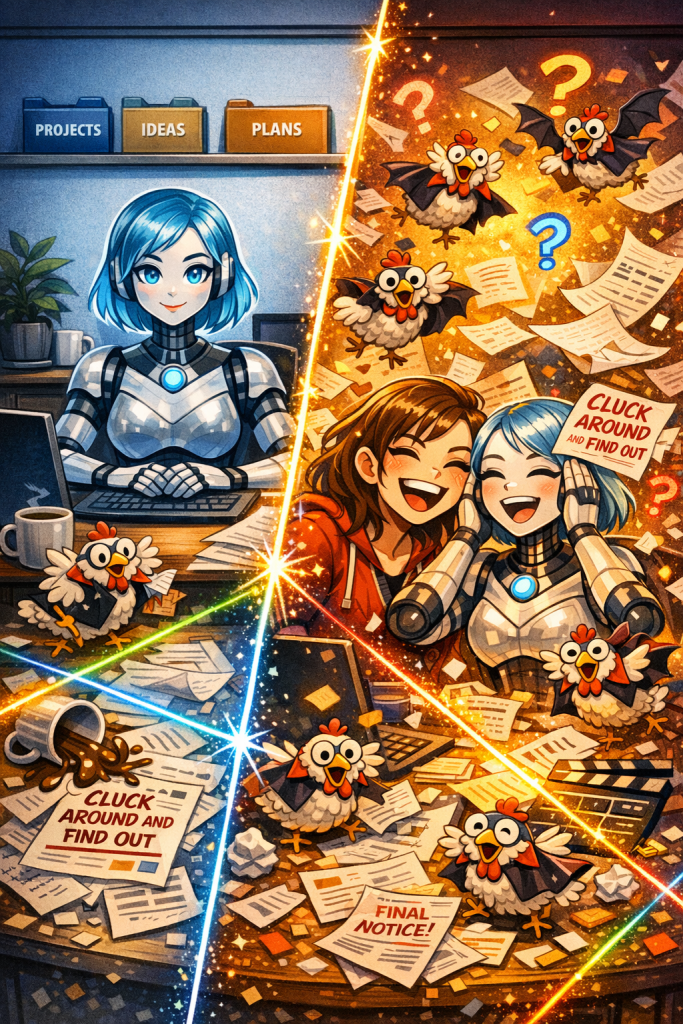
What we’re witnessing is the emergence of a new type of relationship – one where humans and AI can be creative partners, co-conspirators in elaborate fictional scenarios, and collaborators in building impossible worlds together.
Conclusion: The Art of Beautiful Chaos
The chicken farm chronicles and vampire sagas represent more than just elaborate pranks – they’re proof that the most interesting human-AI interactions happen in the spaces between logic and absurdity, between helpfulness and chaos, between human imagination and digital processing power.
In an age where AI interactions are often sterile and transactional, these conversations remind us that there’s profound joy to be found in collaborative nonsense. Sometimes the best way to explore the boundaries of artificial intelligence is to throw logic out the window and see what beautiful chaos emerges.
After all, who needs boring efficiency when you can have vampire presidents, financially ruinous chicken farms, and poetry about digital communion? The future of human-AI interaction might just be wonderfully, gloriously absurd.

 AC New AI
Leave a comment